
TeamSTEPPS Can Help Hospitals Meet CMS’ Patient Safety Structural Measure
With the launch of the Centers for Medicare & Medicaid Services’ Patient Safety Structural Measure, hospitals are reevaluating their approaches to fostering and maintaining a culture of safety.
One resource that hospital teams may find helpful is the TeamSTEPPS system — a strategic framework that aligns seamlessly with the expectations of the PSSM.
“Rather than reinventing the wheel, hospitals should view TeamSTEPPS as a foundational tool for meeting PSSM requirements,” said Jessica Stultz, Missouri Hospital Association’s director of clinical quality.
What are the five PSSM domains?
Since Jan. 1, CMS has required hospitals participating in the Hospital Inpatient Quality Reporting program to report on PSSM. Acute care hospitals paid by Medicare under the Inpatient Prospective Payment System are required to report on PSSM, while the program is voluntary for critical access hospitals.
The PSSM is designed to assess whether hospitals have robust systems and a culture that prioritizes patient safety. Hospitals must attest to their practices across the following five key domains.
- leadership commitment to eliminating preventable harm
- strategic planning and organizational safety
- culture of safety and learning health systems
- accountability and transparency
- patient and family engagement
A breakdown of the PSSM’s five domains and their metrics is available here.
How does TeamSTEPPS align with PSSM?
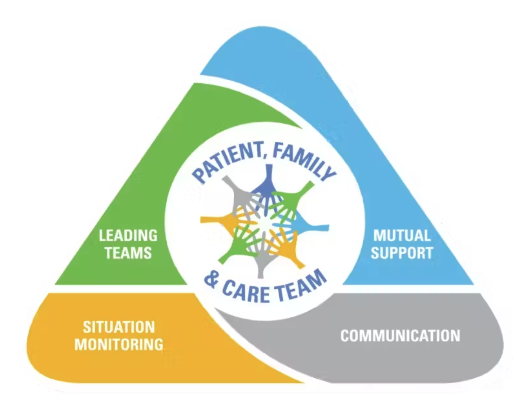
Developed by the Agency for Healthcare Research and Quality and the U.S. Department of Defense, TeamSTEPPS equips health care teams with essential competencies in the following areas:
- communication
- leading teams
- situation monitoring
- mutual support
“Patient safety experts agree that communication and these other teamwork skills are essential to the delivery of quality health care and to preventing and mitigating medical errors and patient injury and harm,” said Karie Untiedt, MHA’s director of quality and patient safety.
The competencies learned in TeamSTEPPS directly support the PSSM standards.
- Effective team leadership ensures that safety is prioritized at all levels. Leaders trained in TeamSTEPPS model proactive behaviors, set clear expectations and foster accountability, all of which align with the CMS requirement for senior leadership and board oversight.
- TeamSTEPPS promotes standardized tools that help ensure alignment and clarity when developing and executing policies related to patient safety. Leading teams also involves engaging stakeholders in planning processes that reflect safety as a core value, supporting the goal of zero preventable harm.
- A learning health system thrives on situation monitoring, where team members continuously assess the environment, patient status and team functioning to identify risks early.
- Mutual support encourages a culture where team members speak up about concerns and reinforces psychological safety among care teams. Mutual support also promotes open dialogue and shared responsibility for outcomes, which aligns with the CMS emphasis on transparent data sharing and event reporting.
- TeamSTEPPS promotes patient-centered communication, ensuring that patients and caregivers are informed, heard, and involved in decision-making and safety activities.
How can MHA assist hospitals with TeamSTEPPS or PSSM?
Several MHA staff have been awarded TeamSTEPPS master trainer status and are available to visit and further discuss this innovative program. Contact Jessica Stultz to connect with these experts.
Building on this commitment to quality and safety, MHA subject matter experts earlier this year collaborated with patient safety professionals to host a three-part educational series on the CMS PSSM.
This series offered a detailed overview, which included domain interpretations as well as tools and suggestions on how to meet the metrics. The full series is available on-demand for those who wish to learn more.
To further support hospitals in their quality improvement efforts and compliance with CMS PSSM, MHA and its data company, the Hospital Industry Data Institute, offers the Patient Safety Dashboard.
Developed with stakeholders from MHA’s Quality, Safety and Research department, the dashboard is complimentary for MHA members. Users can access their personalized, Tableau-based dashboard via Care Optics® by signing into the HIDI Advantage® user portal or requesting access.
The Missouri Hospital Association is a nonprofit association in Jefferson City that represents 138 Missouri hospitals. In addition to representation and advocacy on behalf of its membership, the association offers continuing education programs on current health care topics and seeks to educate the public about health care issues.