
9 Strategies Missouri Hospitals Are Using to Reduce Turnover, Vacancies
MHA Workforce Report: Missouri Hospital Staffing Is Stabilizing But Challenges Remain
The Missouri Hospital Association recently released its 2025 Workforce Report, which offered good news for the state’s hospitals — staffing is stabilizing.
For the first time since 2020, vacancy rates for several health care positions at Missouri hospitals in 2024 dropped below 10%. Turnover in these jobs also has gradually declined since the height of the COVID-19 pandemic but has remained at 22.2% over the past two years.
“The hospital workforce is a top priority for hospital leaders,” Jon D. Doolittle, MHA’s president and CEO, said. “MHA’s annual workforce report helps hospitals understand the workforce environment and build systems that help them deliver quality care.”
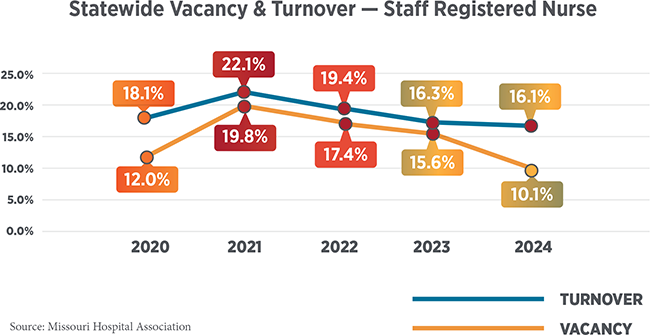
The vacancy rate for registered nurses has consistently improved since 2021 — down to 10.1% last year, while the R.N. turnover rate remained relatively stagnant at 16.1% in 2024.
This year’s report includes statewide and regional data reported as of Dec. 31, 2024, from 127 hospitals and includes vacancy and turnover rates for 34 hospital- and clinic-based positions.
“This data tells an important story,” said Jill Williams, MHA’s vice president of workforce development. “Lower vacancy rates mean that hospitals are successfully filling positions, but we're still seeing significant turnover in certain jobs.”
Williams said the data shows that every Missouri hospital experiences recruitment and retention challenges within their workforce, though there is variation regionally and within the surveyed positions.
“This emphasizes the need for multifaceted strategies to improve workforce sustainability,” Williams said. “We all have a role to play in building a workplace where people feel supported, valued and motivated to build their careers.”
Whether you're in a leadership role or on the front lines, Williams said there are strategies that can make a meaningful difference in improving morale, strengthening teams and ultimately reducing turnover in your organization.
Williams noted the following are actions hospitals can take to support a dynamic health care workforce that is ready to meet the needs of their patients and communities.
1. Make retention a daily priority
Retention doesn’t start when an employee wants to leave; it begins with how an organization supports them while they’re in their role. Hospitals are seeing success in improving retention by investing in employee engagement, recognition programs and leadership development, Williams noted.
Some hospitals also conduct stay interviews — not just exit interviews — to understand why team members stay and how to replicate those conditions.
2. Support mental health and work-life balance
Burnout is a driving force for why many health care workers reconsider their careers. Ongoing mental health support, flexible scheduling, employee assistance programs and peer support groups should remain priorities.
“Hospital leaders should examine staffing models, especially in high-stress roles, to reduce burnout,” Williams said.
Nursing units should strive to maintain appropriate staffing levels and ensure adequate support is available to help manage the workload effectively.
3. Analyze the turnover data by role or department
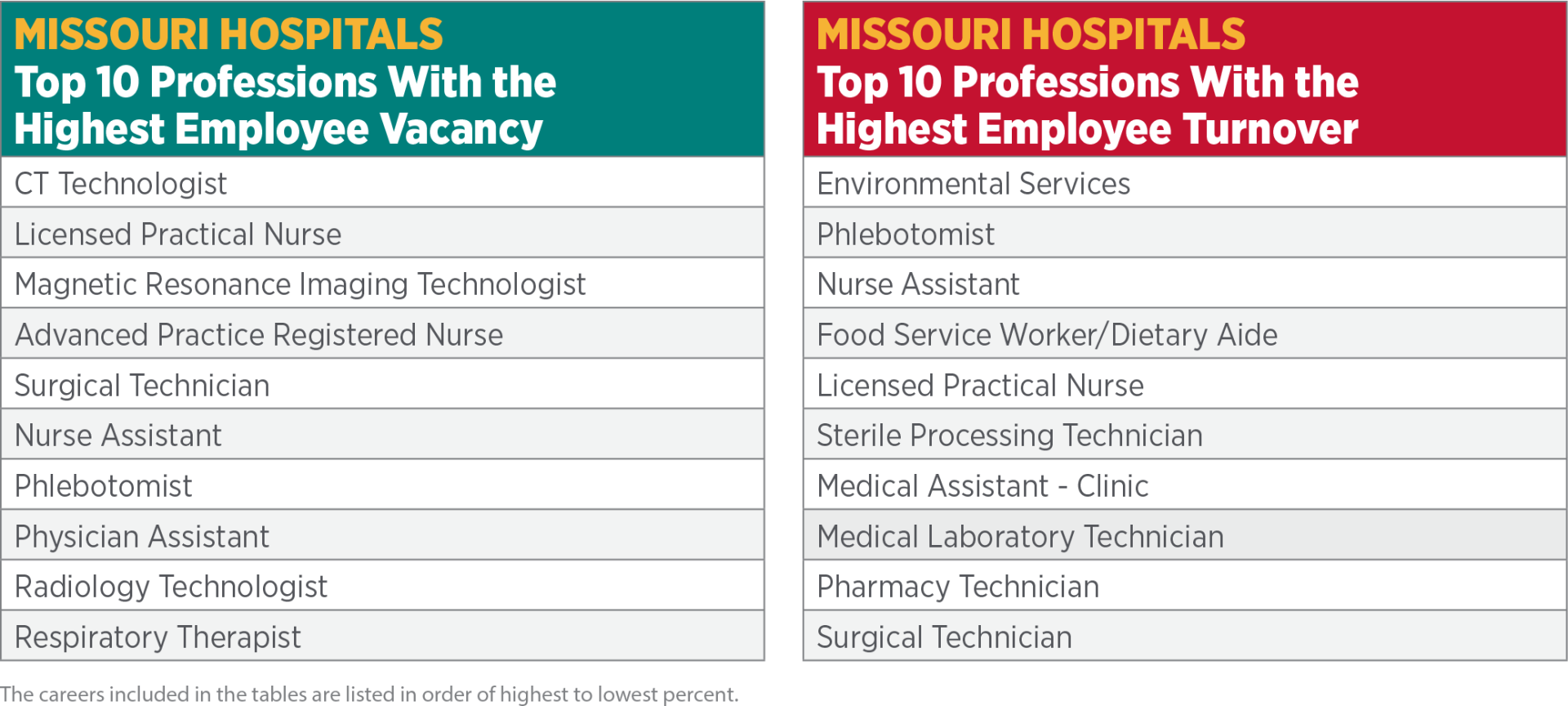
Some roles see more turnover and vacancies than others. According to the report, nurse assistants, phlebotomists, licensed practical nurses and surgical technicians face high vacancy and turnover rates.
Hospital leaders should look at their data to target interventions where they're needed most, Williams said.
4. Boost onboarding and early career support
In many cases, early attrition can be reduced by strong onboarding programs and mentoring for new hires.
“By standardizing your onboarding across units, you can build consistency and reduce early exits,” Williams said.
Department leaders also should consider assigning peer mentors or preceptors to support employees. MHA offers a Preceptor Academy to train preceptors.
5. Ask for and act on feedback
Frequent feedback can guide real change, but only if it’s acted on. Hospitals should conduct regular pulse surveys to identify employee satisfaction and morale trends.
“In addition, hospital leaders should make sure to close the loop with staff by sharing what actions are being taken based on the feedback received,” Williams said.
6. Invest in retention incentives
Some hospitals offer bonuses tied to career milestones for employees.
“Be sure you are recognizing and rewarding long-term staff,” Williams said.
In addition, tuition and student loan assistance, or scholarships, can help employees continue their education and open growth opportunities for them in the organization.
7. Improve workplace environments
Healthy environments retain strong teams. Engagement surveys tailored to nursing staff are especially important in addressing the unique challenges of this profession. Williams said shared governance can help people feel heard, appreciated and that they have a voice in decision-making.
Leaders also should foster appreciation through recognition programs, shoutouts or rounding.
8. Partner with schools and training programs
Williams encourages hospitals to work with high schools, community colleges and training providers to promote awareness of health care jobs, offer clinical placements and design fast-track or bridge programs.
9. Support career pathways and upskilling
Missouri hospitals can invest in the future of health care and ensure they have a sustainable workforce moving forward by creating “grow-your-own” programs.
“Hospitals can invest in internal pipeline programs that recruit and train existing support staff, students and local talent into roles that are needed,” Williams said.
Hospitals also can help advance their employees’ careers by offering programs to upskill and reskill.
Why it all matters
“A strong hospital workforce is essential to Missourians’ health,” Doolittle said. “The data indicates hospitals continue to make progress toward long-term sustainability. Most importantly, it indicates that opportunities exist in health care for careers that provide personal and professional growth for individuals who want to be part of building healthier and stronger communities.”
A workplace should be where everyone feels valued, supported and excited to contribute to the organization’s mission. The strategies outlined here move beyond policies and programs to investments in the people who make hospitals the centers of healing and hope in their communities.
“The data shows we're making progress. We're seeing positive trends in many areas, but we have important work ahead of us,” Williams said.
MHA continues to partner with hospitals across Missouri to help build a strong, sustainable workforce. To learn more about workforce strategies, and statewide or regional data, visit MoHospitals.org.
The Missouri Hospital Association is a nonprofit association in Jefferson City that represents 138 Missouri hospitals. In addition to representation and advocacy on behalf of its membership, the association offers continuing education programs on current health care topics and seeks to educate the public about health care issues.